

How to Buy a Car Without Getting Taken Apart at the Dealership
Car dealerships are not your enemy. But they are a business, and their job is to make money on the transaction. Knowing how they do that is the entire game.
The Number That Actually Matters
Before you walk into a dealership — or click “submit” on an online inquiry — you need to know one number: the out-the-door price.
Not the sticker price. Not the monthly payment. The total amount you will pay to drive that car off the lot, including all taxes, fees, and dealer add-ons. That is the only number worth negotiating on.
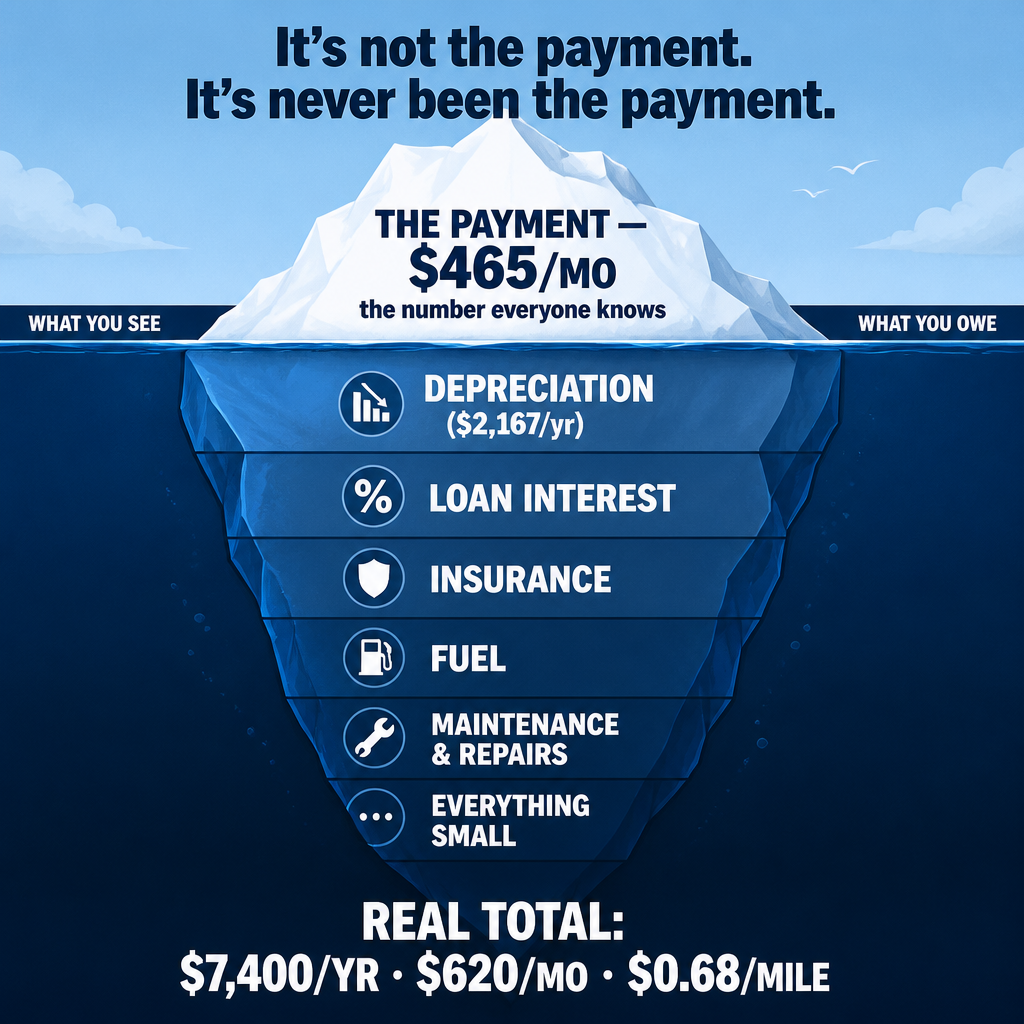
Dealers love to talk monthly payments because it’s easier to hide profit in a monthly payment. “We can get you to $450 a month” sounds better than “this car is going to cost you $38,000 all in.” If you negotiate on monthly payment, they have levers you can’t see — extending the loan term, adjusting the interest rate, adding products to the back end. Always negotiate on total price.
Do Your Research Before You Go
This is the step most people skip and the reason most people feel like they lost.
Know the market value of the car you want. Kelley Blue Book, Edmunds, and CarGurus all give you real transaction data — what people are actually paying for that car in your area, not just the sticker. Come in knowing whether the price they’re quoting is above or below market.
Know your credit score before they run it. If you plan to finance through the dealership, the dealer acts as a middleman between you and a lender and can mark up the interest rate. Knowing your credit score and getting a pre-approval from your own bank or credit union first gives you a baseline. If the dealer can beat it, great. If they can’t, you have your own financing ready.
Know the trade-in value of your current car separately. Dealers bundle trade-in and purchase negotiations on purpose. Get an offer from CarMax or a similar service before you go. When you know what your car is worth independently, you can evaluate the trade-in offer on its own merits instead of getting confused by how the numbers interact.
New vs. Used: An Honest Conversation
Here’s something the car industry would rather you not think too hard about: a brand-new car loses somewhere between 15–25% of its value in the first year. Just from being driven. You haven’t done anything wrong — that’s just what happens to new cars. By year three, a car that cost $35,000 new might be worth $22,000.
That depreciation hit lands on whoever buys new. Which doesn’t have to be you.
A two- or three-year-old certified pre-owned vehicle with low miles has already absorbed that steepest drop and often still comes with remaining manufacturer warranty or a CPO warranty on top. You’re not buying someone’s problem — you’re buying a car that already proved it didn’t fall apart, at a price that reflects the reality of what it’s worth now.
Buying used also opens up the possibility of skipping a car loan entirely if your budget allows, or at minimum financing a significantly smaller number. And a smaller loan — or no loan — means less interest paid over time, lower monthly payments, and potentially lower insurance costs.
When you add up what you save on depreciation, interest, and insurance over the life of the car? The difference between driving new and driving used can be tens of thousands of dollars. What you do with that money is where it gets really interesting — and we have a whole post on exactly that.
The Back End Is Where It Gets Complicated
Once you’ve agreed on a price, you’ll be handed off to the finance office. This is where extended warranties, GAP insurance, paint protection packages, tire and wheel coverage, and various other products get presented — often in a way that makes them feel like part of the deal rather than optional additions.
Some of these products have legitimate value. Some don’t. A few things worth knowing:
GAP insurance covers the difference between what you owe on your loan and what the car is worth if it’s totaled. If you’re financing more than the car’s value, GAP coverage makes sense. But you can often buy it cheaper through your own auto insurer than through the dealership.
Extended warranties can be worthwhile on certain vehicles or for certain buyers. Read what’s actually covered before you decide. Many have exclusions that make them less useful than they sound.
Everything else — paint protection, fabric treatment, tire and wheel packages — are high-margin add-ons that are almost always available cheaper elsewhere or not worth it at all. You can decline all of it.
You are allowed to say no in the finance office. It might feel uncomfortable. Say no anyway.
A Few More Things Worth Knowing
The end of the month is a real thing. Salespeople have quotas. Toward the end of the month, the incentive to close deals increases, which can work in your favor.
You can buy cars online or through brokers. If the dealership experience sounds exhausting, services like Costco Auto Program and TrueCar offer a more transparent, lower-pressure process. It’s not the only way, but it’s a real option.
Your trade-in and your purchase are two separate transactions. Negotiate them that way.
This information is intended for informational and educational purposes only and is not individual investment or tax advice. Investing involves risk, principal loss is possible.
Please remember that I am not an investment advisor nor am I a portfolio manager, but I can introduce you to a few.



More information on how we treat your information is available in our Privacy Policy.